

Written by: Dylan Boesnach
Reading time: 5 minutes
COP30 in Belém: Among political decisions, Amazonian resilience and inspiration for the future
COP30 opened in Belém on November 10, in the heart of the Brazilian Amazon a symbolic location for global climate issues. UN Secretary-General António Guterres reiterated that temporarily exceeding the 1.5°C threshold is now “inevitable,” emphasizing the need to limit its magnitude and duration as much as possible. Brazilian President Lula inaugurated the conference with two major commitments: a gradual plan to phase out fossil fuels and a program to combat deforestation, emphasizing a just transition that protects Indigenous peoples.
These announcements resonate deeply in Belém, where the Amazon rainforest, still intact in many areas, acts as a natural barrier and carbon sink, although its boundaries are fragile. Indigenous areas experience 87.5% less deforestation than the rest of the country and up to 80% of the rainfall supporting the agricultural economy of 18 Brazilian states depends directly on this forest system. Coastal flooding and saltwater intrusion serve as reminders that the forest provides protection, but its balance remains fragile, leaving the most vulnerable populations on the front lines. In Belém, the climate emergency is becoming tangible.

Conversations with the Indigenous People
Political Commitments and the Limits of Global Consensus
The COP concluded on November 22nd with an agreement that many felt was insufficient. Some progress was made, particularly regarding financial commitments for the preservation of tropical forests and climate change adaptation for the most vulnerable nations.
However, there was no explicit mention of reducing the world’s reliance on fossil fuels in the final text. Oil-producing countries blocked this strategy, which was supported by European countries, despite the fact that these fuels still account for 80% of CO2 emissions. On the ground, it was clear that major powers approached the COP differently: some were very present others almost absent, like the United States.
China, for its part, understood this well and took advantage of its strategic presence, exemplified by one of the most imposing pavilions, to position itself as a major technological and diplomatic player in the transition. Its footprint was especially visible throughout the city. In fact, Chinese batteries, solar panels and electric cars could be seen everywhere.
According to the Brazil-China Business Council, 72% of Chinese investment in Brazil in 2024 went to green energy and the country is now the world’s second-largest importer of Chinese solar panels. This dynamic demonstrates the importance of international supply chains for Brazil’s decarbonization. However, it is not enough to ease tensions on the ground, where many Indigenous leaders continue to feel unheard, despite the commitments made by the Lula government.
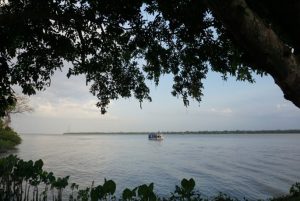
The Amazon River
Amazonian Food Systems
Beyond politics, COP30 offered the opportunity to discover Belém in the heart of the Amazon, which, for the duration of the conference became the symbolic capital of Brazil. The local population shared with us the unique connection they maintain with the forest, The local population shared with us the unique connection they maintain with the forest, an affinity reflected in their cuisine.
Amazonian cuisine is based on fish, local plants and herbs such as jambú and cassava, as well as forest fruits: Pará nuts, açaí, guaraná, cupuaçu, pupunha, bacuri, tucumã… More than 1,200 species of edible fruits have been identified in the Brazilian Amazon. These products, consumed fresh or lightly cooked, come from sustainable forests and agroforestry systems. They are adapted to local conditions and require no intensive irrigation or fertilizers.
This diet combines biodiversity, local self-sufficiency, high-quality nutrition and a low environmental impact. It represents an alternative to industrial food systems, with simple dishes prepared from mostly raw or lightly cooked ingredients, preserving flavors and nutrients while reducing waste and packaging. According to Plos One, 84% of the trees in the Amazon rainforest belong to species useful to humans for food, timber, medicine or crafts.
These food habits also embody a cultural and identity heritage that respects the environment, reinforcing the social and community value of food, as well as social justice and inclusion. Unlike globalized fast-food diets, many populations depend directly on the forest for food, medicine, and shelter, perpetuating their traditional knowledge. The sustainable use of resources helps preserve these ways of life and creates jobs for gatherers, farmers and traders.
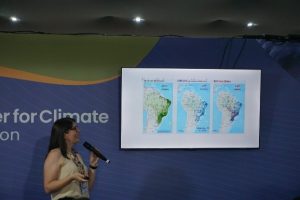
Presentation about the East Coast of Brazil
The Role of Youth in a Just Climate Transition
COP30 showed that without young people’s active involvement and the incorporation of local knowledge, climate transition cannot be successful. Future leaders can take part in conservation efforts and support agroforestry. They can also advocate for sustainable and healthy food and raise awareness in their local communities. Every action matters, as shown by educational workshops, student projects, and neighborhood NGOs.
Understanding the economic, political and cultural issues at stake at COP30, such as dependence on fossil fuels or the role of emerging countries in the energy transition is essential for developing engaged and critical citizens. Drawing inspiration from local food practices, the resilience of Amazonian communities, and sustainable innovations can contribute to global solutions.
Beyond the stereotypes about youth, polarization, or the occasional overzealous activism on campuses, it is crucial to focus on concrete issues that are vital for our planet.These challenges unite rather than divide: preserving the resilience of forests, ensuring the sustainability of territories whose fragile ecosystems are threatened by deforestation, passing on knowledge to future generations and promoting sustainable food systems.
This shared focus on knowledge transmission and coexistence made COP30 a pivotal moment to assess the state of our planet, confront our differences and turn our diversity into a collective strength.

Koen Vanderschelden & Dylan Boesnach – CoSE COP 2025 Representatives
When Global Goals Meet Local Action
Belém reminds us that the climate transition is not decided solely in conference rooms, but on the ground, in places like forests, markets and local communities. COP30 was very much about the necessity of protecting biodiversity, supporting Indigenous knowledge and empowering youth which were not to be considered as options but as basic requirements for the future. Along with the people of different countries and cultures standing together for a common cause, the urgency was made clear.
What remains is mutual accountability to our planet. Local initiatives, Indigenous knowledge and citizen engagement demonstrate how forests, communities and sustainable food systems strengthen one another confirming that each action matters. Despite disagreements and tensions, COP30 revealed how the diversity of cultures, perspectives and generations can become a collective force. It reminds us that climate transition becomes possible when everyone takes concrete action and respects the ties that bind us to the Earth.

My name is Dylan Boesnach, I am from Brussels, Belgium. With a master’s degree in international relations, I have worked on environmental issues in various multicultural contexts notably Spain and Brazil, where I gained hands-on experience in a natural reserve. Having contributed to projects assessing the impacts of climate change, I am eager to learn more about Brazilian initiatives in biodiversity conservation and reforestation.
Brazil’s extraordinary ecological wealth positions it as a leading actor on the international stage. Within the Circle of Sustainable Europe which I represent at COP30 in Belém, I aim to contribute to the collective reflection on environmental preservation and sustainability. I see this opportunity as a springboard to connect with diverse stakeholders and partners, to potentially engage in forward-looking initiatives.


